
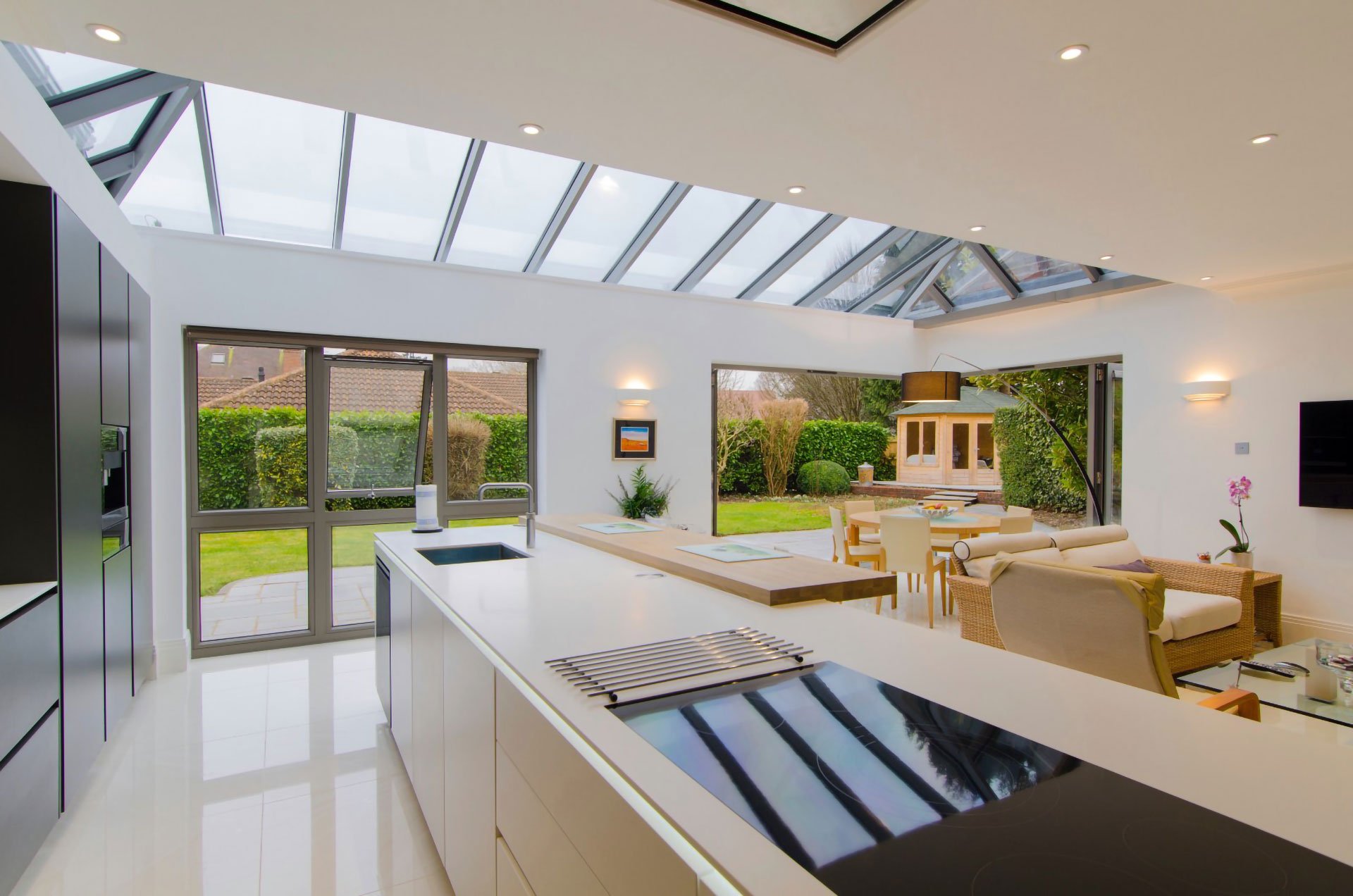
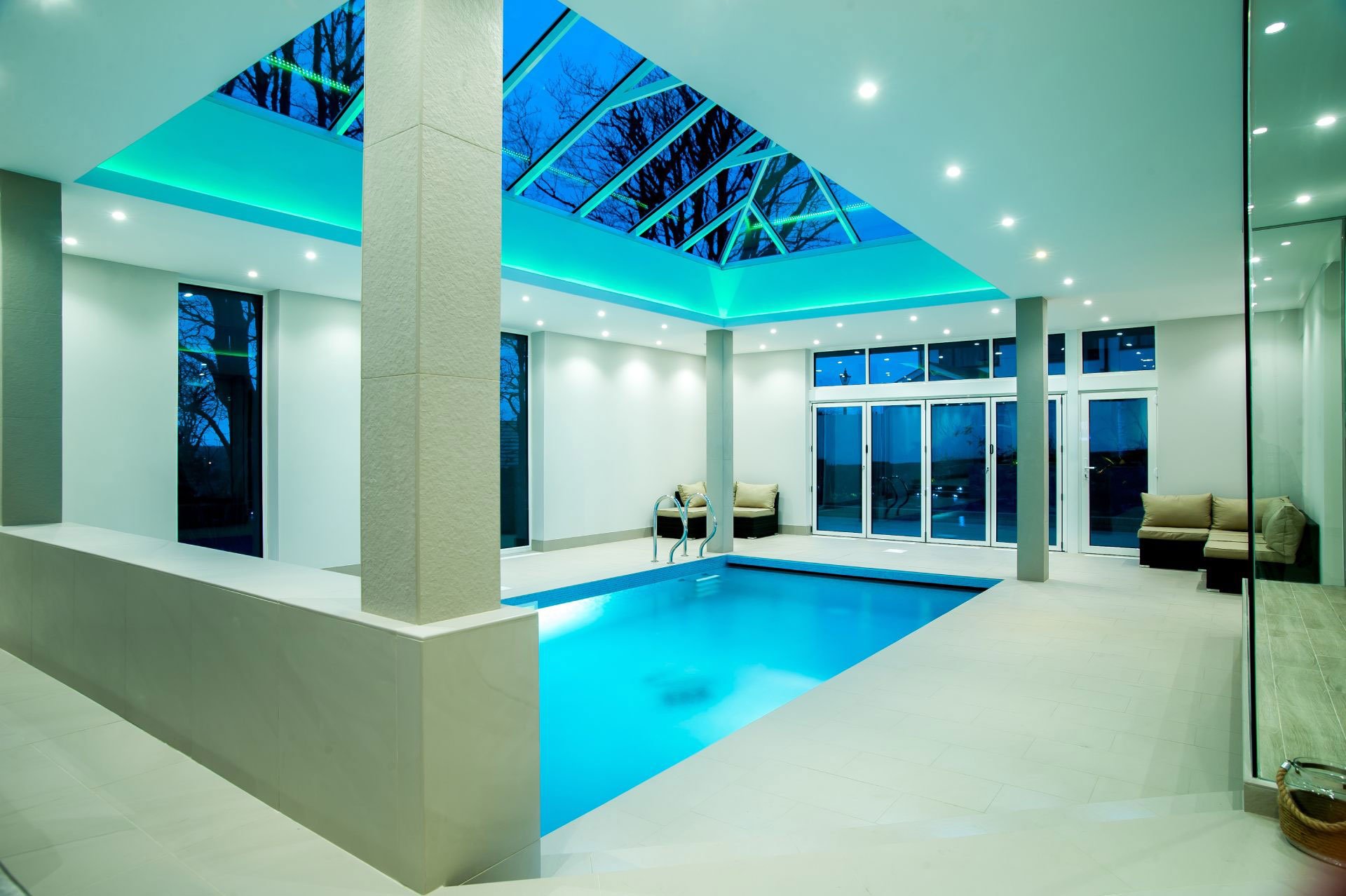
Choose a roof lantern if you want the glass in your roof to be a feature, with angled panes that rise above the roof line and add height to the room below. Choose a flat roof light if you want a clean, flush ceiling, a low profile from outside or a light that opens for fresh air. Both work on a flat roof extension, and both have to meet the same building regulations limit.
The choice usually comes down to how the room should feel, what the roof can take, whether you need ventilation and how much of the extension's glazing allowance the doors have already used. We supply and fit both, and each point is covered below.
How the two differ
Atlas, whose systems we fit, puts the difference simply. Roof lanterns lift a flat roof through raised and angled windows, while flat rooflights lie flush with your ceiling without rising upwards.
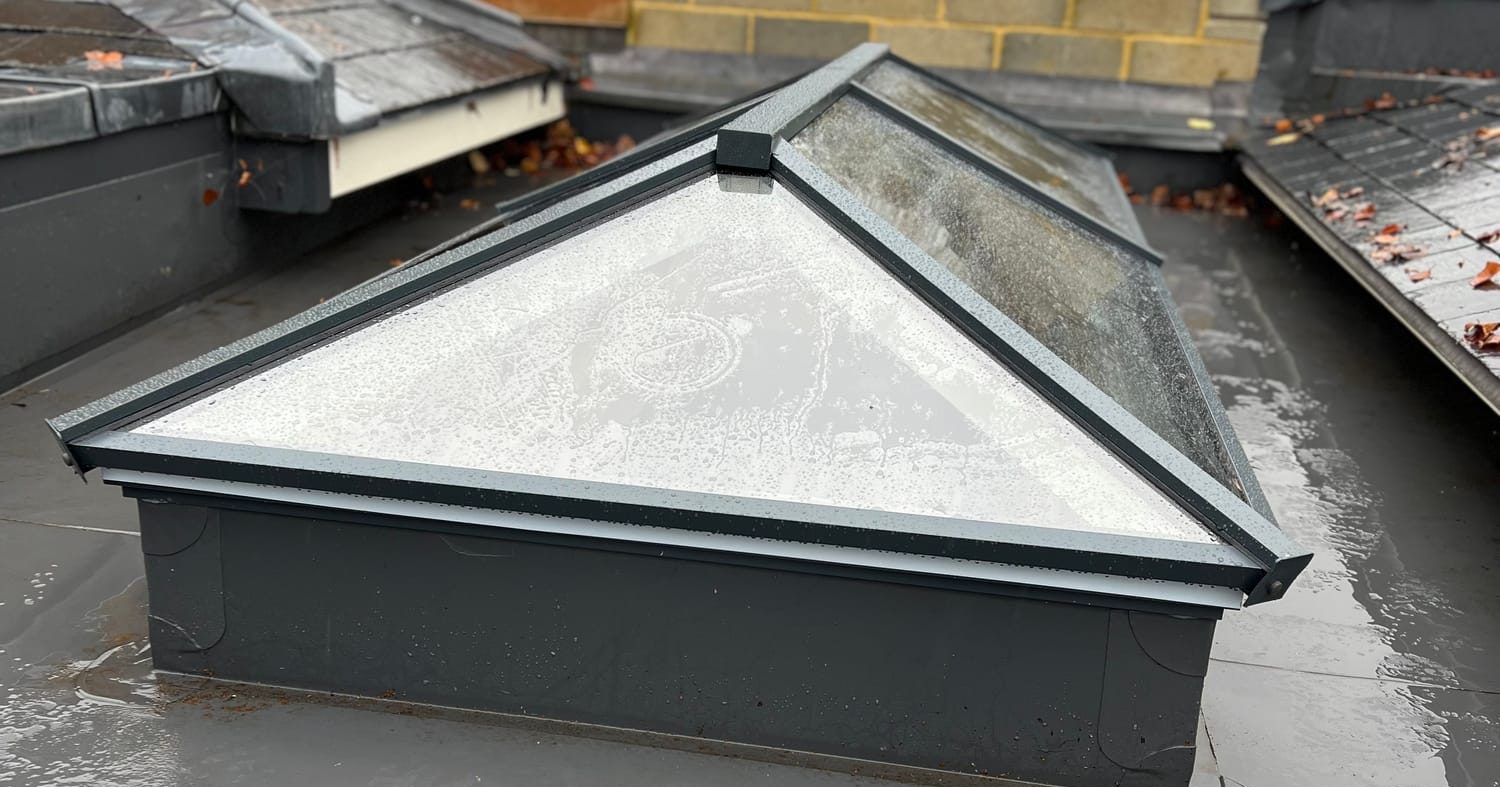
A lantern is a small glazed roof of its own, built from a ridge, hips and rafters on a frame that sits on the flat roof. A flat roof light is a single framed glazed unit on a kerb, laid to a gentle slope so that rain runs off. From the garden, a lantern is part of the look of the extension. A flat roof light is barely seen.
Light and the feel of the room
A lantern draws light in through several angled panes and opens the ceiling up into the space above, so the room feels taller at its centre. It suits a kitchen or family room where the roof glass is the centrepiece.
A flat roof light keeps the ceiling as one flat plane, with the glass set into it. Our flat roof lights have slim frames and sit so flush with the ceiling that they hardly show from inside, which suits a minimal interior, a narrow side return or a room where you want light without a change of shape overhead.
Size matters too. Atlas makes stock lanterns from 1000mm x 1000mm up to 2000mm x 4000mm, and bespoke lanterns up to 5m x 10m. Its flat rooflight comes in three stock sizes, 1000mm x 1000mm, 1000mm x 1500mm and 1000mm x 2000mm, with made to measure sizes as well. For a long run of light, several flat roof lights in a row are another option.
Drainage and what the roof needs
A lantern sheds water down its pitched sides. Atlas lanterns come with a stock pitch of 25 degrees, with other pitches on request for some styles.
A flat roof light depends on its kerb. Atlas gives a minimum pitch of 5 degrees so that water drains off the glass, and recommends a kerb width of 80mm. That fall is built into the upstand the light sits on, which is why the kerb is planned with the roof rather than added afterwards.
Both need a properly built opening in the roof, and a lantern stands taller than a flat light of the same size. Atlas lanterns are tested to a uniformly distributed load of 3.5kN/m², but whether the roof structure can carry the light is a question for your builder or structural engineer.
Heat, glare and the building regulations
For a new rooflight in an existing home or an extension, Approved Document L sets a limiting U-value of 2.2 W/m²K (Table 4.2). Atlas quotes 1.5 W/m²K as standard for its double-glazed lantern rafter and as low as 0.9 with triple glazing, and overall U-values of 1.4 W/m²K for its flat rooflight.
One detail favours the flat light on paper. Approved Document L says a rooflight's U-value should be based on its outer developed surface area, which is often greater than the opening in the roof (Table 4.2, note 11). A lantern has more glass and frame than the hole it covers, so more surface for heat to pass through, while a flat light is close to the size of its opening.
A south-facing roof light can also make a room hot and bright in summer. Both Atlas systems offer solar control and self-cleaning coatings, and the lantern's standard glass blocks 91% of harmful UV rays, according to Atlas. If the extension faces south, ask about solar control glass at the quote stage, because the glass is specified when the units are made.
The 25% glazing limit
Roof glass counts towards the glazing allowance for an extension. Approved Document L says the total area of windows, roof windows, rooflights and doors should not exceed 25% of the extension's floor area, plus the area of any windows and doors the extension covers up (paragraph 10.7). Go over it and the extension as a whole has to be shown by calculation to perform as well as one that meets it (paragraph 10.9).
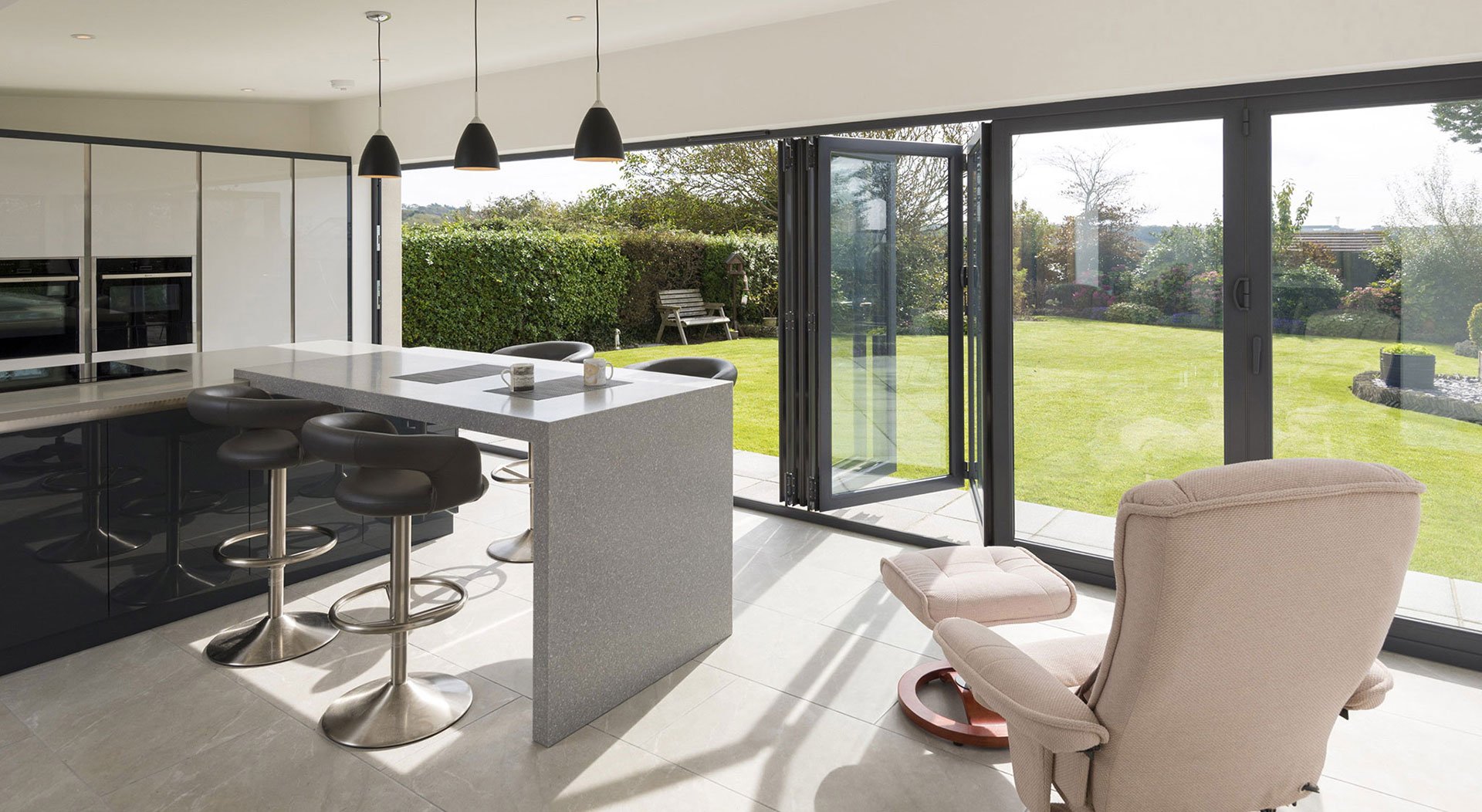
That is why the roof glass and the doors are best chosen together. Wide slim aluminium sliding doors can take up much of the allowance before the roof is designed, and so can a full-width set of bi-fold doors, which also need regular cleaning and lubrication to keep running smoothly.
Ventilation
A fixed light lets in daylight but no air. Our flat roof lights come fixed, manually hinged, electrically hinged and sliding, so a flat roof light can double as a vent over a kitchen or a bathroom. An electrically hinged light suits a roof that is out of reach from the floor. If ventilation matters, tell us at the start, because the opening type is part of the design.
Planning permission
GOV.UK's householder guidance limits a rooflight added to an existing roof under permitted development to 0.15 metres of protrusion beyond the roof slope. A raised lantern stands taller than that. On a new extension the lantern is part of the extension's design, so put its height on the drawings from the start and let your council or planning adviser confirm how the extension is assessed.
If you want to walk on it
If the flat roof will double as a terrace, or the glass sits in a floor or a deck, walk-on glass is the product built to be stood on. A roof that people use needs guarding at its edges too, and Approved Document K names roofs, including roof lights and other openings, among the places to guard (paragraph 3.1). A frameless glass balustrade is one way to provide it without losing the view.
Which one to choose
Choose a roof lantern when the roof glass is meant to be seen and felt, the room has the width for it and a little extra height overhead suits the space. Choose a flat roof light when you want a flush ceiling, a low profile outside, an opening light, or a row of lights along a narrow room. If your existing roof glass is sound and only one sealed unit has misted, ask about replacing that unit before replacing the whole light. New glass in an existing frame does not have to meet the energy efficiency requirements that a whole new rooflight does (Approved Document L, paragraph 10.6).
Photos of roof lanterns and roof lights we have fitted are on our previous work page, and frames come in over 150 RAL colours, so they can match the doors below.
Get advice on your roof
Toucan Glass supplies and fits roof lanterns and flat roof lights across Kent and the South East, from Ashford, Maidstone and Tunbridge Wells to Folkestone, Medway, Canterbury and Thanet. Contact us with your plans or the size of the roof, and we will help you weigh up a lantern against a flat light for your extension.